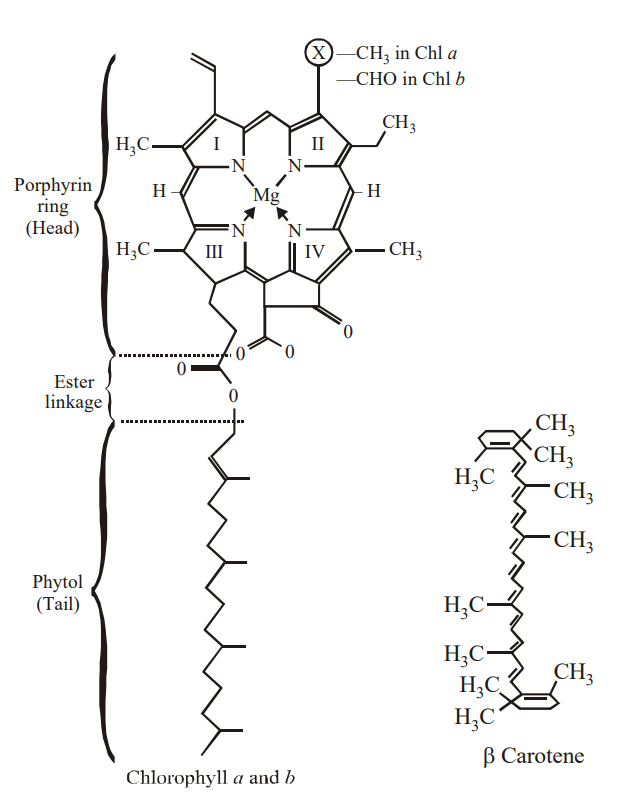
Magnesium is absorbed by plants in the form of the divalent ion $Mg^{2+}$. It is a constituent of the ring structure of chlorophyll: the chlorophyll molecule has a porphyrin head made of four pyrrole rings, and all four rings are bound to a magnesium atom ($Mg^{2+}$) present at the centre. So a plant requires magnesium for chlorophyll synthesis; its deficiency causes chlorosis. Magnesium also activates the enzymes of respiration and photosynthesis, is involved in the synthesis of DNA and RNA, and helps to maintain the structure of ribosomes. Cell wall development and holding the cells together are functions of calcium, which forms calcium pectate of the middle lamella. So the answer is chlorophyll synthesis.
ConceptFunctions of magnesium
Role of Macronutrients in past papers
2 questions from this chapter have appeared across 2 exam years.