Looking for classes? Ksquare Career Institute, Bengaluru →

Which one of the following diagrams represents the placentation in $Dianthus$?
A
- 
B
- 
C
- 
D
- 
Detailed Solution
$Dianthus$ (and $Primrose$) shows free central placentation.
In free central placentation the ovules are borne on a central axis and septa are absent, so the ovary is unilocular.
The correct diagram is therefore the transverse section showing a single chamber with the ovules attached all round a central column that is not connected to the ovary wall by partitions.
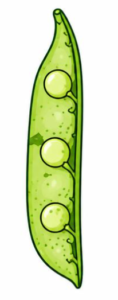
The other diagrams show marginal placentation (ovules in rows along the ventral suture of a pod, as in pea), parietal placentation (ovules on the inner wall of the ovary, as in mustard) and axile placentation (ovules on a central axis in a multilocular ovary with septa, as in china rose and tomato).
Hence the diagram of free central placentation represents $Dianthus$.
In free central placentation the ovules are borne on a central axis and septa are absent, so the ovary is unilocular.
The correct diagram is therefore the transverse section showing a single chamber with the ovules attached all round a central column that is not connected to the ovary wall by partitions.
The other diagrams show marginal placentation (ovules in rows along the ventral suture of a pod, as in pea), parietal placentation (ovules on the inner wall of the ovary, as in mustard) and axile placentation (ovules on a central axis in a multilocular ovary with septa, as in china rose and tomato).
Hence the diagram of free central placentation represents $Dianthus$.