Looking for classes? Ksquare Career Institute, Bengaluru →

Which of the following compounds undergoes nucleophilic substitution reaction most easily?
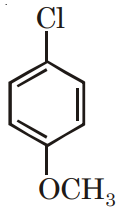
A
- 
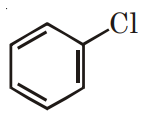
B
- 
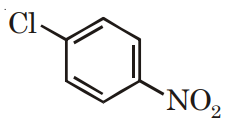
C
- 
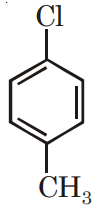
D
- 
Detailed Solution
Aryl halides are normally unreactive towards nucleophilic substitution because the C–Cl bond has partial double bond character due to resonance.
The reaction proceeds through a negatively charged intermediate (carbanion) formed by attack of the nucleophile on the ring carbon bearing chlorine.
An electron-withdrawing group such as $-NO_2$ at the ortho or para position stabilises this carbanion by delocalising the negative charge onto itself (−R and −I effects), so it makes the substitution much easier.
Electron-releasing groups such as $-OCH_3$ (+R) and $-CH_3$ (+I, hyperconjugation) increase the electron density of the ring, destabilise the carbanion and make the substitution even more difficult than in chlorobenzene.
Hence 4-nitrochlorobenzene undergoes nucleophilic substitution most easily.
The reaction proceeds through a negatively charged intermediate (carbanion) formed by attack of the nucleophile on the ring carbon bearing chlorine.
An electron-withdrawing group such as $-NO_2$ at the ortho or para position stabilises this carbanion by delocalising the negative charge onto itself (−R and −I effects), so it makes the substitution much easier.
Electron-releasing groups such as $-OCH_3$ (+R) and $-CH_3$ (+I, hyperconjugation) increase the electron density of the ring, destabilise the carbanion and make the substitution even more difficult than in chlorobenzene.
Hence 4-nitrochlorobenzene undergoes nucleophilic substitution most easily.