Solution

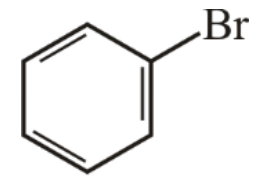
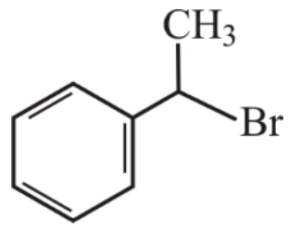
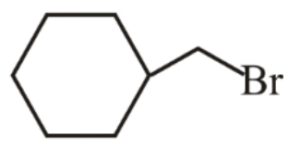
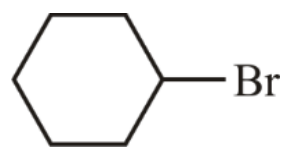
The compound forming the most stable carbocation undergoes $S_N1$ reaction at the fastest rate. 1-phenylethyl bromide ($C_6H_5-CH(CH_3)-Br$) ionises to give a benzylic carbocation that is stabilised by resonance with the benzene ring (and by the methyl group). So it undergoes $S_N1$ reaction with the fastest rate.

Concept Comparing SN1 rates via carbocation stability of halide structures

Haloalkanes and Haloarenes in past papers

55 questions from this chapter have appeared across 25 exam years.