Solution

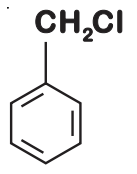
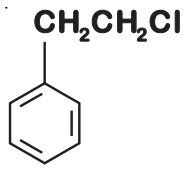
$S_N1$ reactions proceed via a carbocation intermediate and are favoured when the carbocation is stabilised. Benzyl chloride (resonance-stabilised benzylic cation), allyl chloride (resonance-stabilised allylic cation), and tert-butyl chloride (stable tertiary carbocation) all readily undergo $S_N1$. 2-Phenylethyl chloride would form an unstabilised primary carbocation (the phenyl ring is not directly attached to the carbon bearing the leaving group), so it does not readily undergo $S_N1$.

Concept SN1 reaction mechanism and carbocation stability

Haloalkanes and Haloarenes in past papers

55 questions from this chapter have appeared across 25 exam years.