Looking for classes? Ksquare Career Institute, Bengaluru →

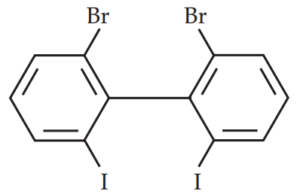
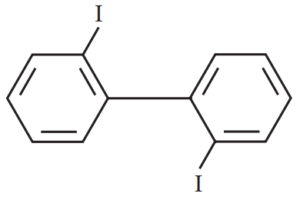
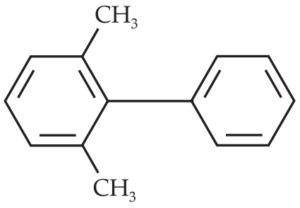
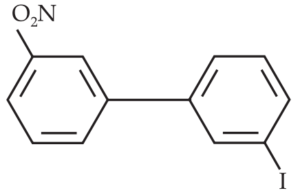
Which of the following biphenyls is optically active?
A
- 
B
- 
C
- 
D
- 
Explanation
Bulky ortho groups on both rings restrict rotation, creating axial chirality.
Detailed Solution
A substituted biphenyl can have a chiral axis when the steric (van der Waals repulsion) interaction between ortho substituents is sufficient to stop rotation of the aromatic rings relative to each other about the bond joining the two rings.
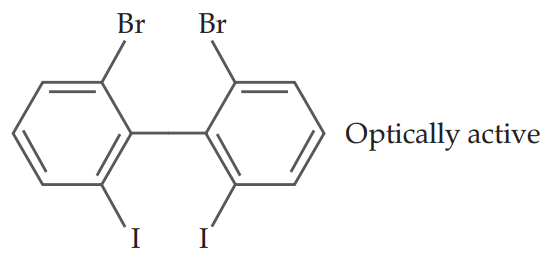
So the biphenyl with Br and I at all four ortho positions is optically active.
So the biphenyl with Br and I at all four ortho positions is optically active.