Looking for classes? Ksquare Career Institute, Bengaluru →

Chemistry
Start Practice Clear paper filter
-
What is the change in oxidation number of carbon in the following reaction? $CH_4(g)+4Cl_2(g)\rightarrow CCl_4(l)+4HCl(g)$In $CH_4$: x + 4(+1) = 0 ⇒ x = –4 In $CCl_4$: x + 4(–1) = 0 ⇒ x = +4 So the oxidation number of carbon changes from –4 to +4.
-
An increase in the concentration of the reactants of a reaction leads to change in:The number of collisions per second per unit volume of the reaction mixture is the collision frequency. Increasing the concentration of reactants increases the number of molecules per unit volume, so the collision frequency changes (increases). Heat of reaction, threshold energy and activation energy do not depend on concentration.
-
Reaction between benzaldehyde and acetophenone in presence of dilute NaOH is known as:$C_6H_5CHO + CH_3COC_6H_5 \xrightarrow{dil.\ OH^-} C_6H_5CH(OH)CH_2COC_6H_5 \xrightarrow{-H_2O} C_6H_5CH=CHCOC_6H_5$ Benzaldehyde (no $\alpha$-H) and acetophenone (with $\alpha$-H) react in the presence of dilute alkali to undergo cross aldol condensation (Claisen–Schmidt reaction).
-
Which of the following is a natural polymer?Natural rubber is a naturally occurring polymer: cis-1,4-polyisoprene. Polybutadiene, Buna-S and Buna-N are synthetic polymers.
-
An element has a body centered cubic (bcc) structure with a cell edge of 288 pm. The atomic radius is:For bcc: $\sqrt{3}a = 4r \Rightarrow r = \frac{\sqrt{3}}{4}a$ With a = 288 pm: $r = \frac{\sqrt{3}}{4} \times 288$ pm
-
Reaction between acetone and methylmagnesium chloride followed by hydrolysis will give:$CH_3COCH_3 \xrightarrow{CH_3MgCl} (CH_3)_3C-OMgCl \xrightarrow{hydrolysis} (CH_3)_3C-OH$ The product is tert-butyl alcohol (2-methylpropan-2-ol).
-
The following metal ion activates many enzymes, participates in the oxidation of glucose to produce ATP and with Na, is responsible for the transmission of nerve signals.Potassium ($K^+$) activates many enzymes, participates in the oxidation of glucose to produce ATP, and along with sodium is responsible for the transmission of nerve signals.
-
The number of protons, neutrons and electrons in $^{175}_{71}Lu$, respectively, are:$^{175}_{71}Lu$: number of protons = number of electrons = 71 Number of neutrons = mass number – protons = 175 – 71 = 104 So protons, neutrons and electrons are 71, 104 and 71.
-
Identify a molecule which does not exist.$He_2$: electronic configuration $\sigma 1s^2\,\sigma^*1s^2$ Bond order $= \frac{1}{2}(N_b - N_a) = \frac{1}{2}(2 - 2) = 0$ Since the bond order is zero, the $He_2$ molecule does not exist.
-
Which of the following oxoacid of sulphur has $-O-O-$ linkage?Peroxodisulphuric acid ($H_2S_2O_8$) contains the peroxo –O–O– linkage:
$HO-SO_2-O-O-SO_2-OH$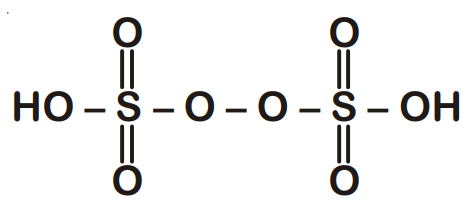
-
Elimination reaction of 2-Bromo-pentane to form pent-2-ene is: (a) $\beta$-Elimination reaction (b) Follows Zaitsev rule (c) Dehydrohalogenation reaction (d) Dehydration reaction$CH_3-CH(Br)-CH_2-CH_2-CH_3 \xrightarrow{base} CH_3-CH=CH-CH_2-CH_3$ A $\beta$-hydrogen is abstracted, so it is a $\beta$-elimination reaction. The more substituted alkene (pent-2-ene) is formed, so it follows Zaitsev's rule. H and Br are removed, so it is a dehydrohalogenation reaction (not dehydration). So (a), (b) and (c) are correct.
-
Paper chromatography is an example of:Paper chromatography is a type of partition chromatography: the stationary phase is water trapped in the special chromatography paper, and the mobile phase is the solvent, between which the components are partitioned.
-
Which one of the followings has maximum number of atoms?Number of Mg atoms $= \frac{1}{24}N_A$ Number of O atoms $= \frac{1}{32} \times 2 \times N_A = \frac{1}{16}N_A$ Number of Li atoms $= \frac{1}{7}N_A$ Number of Ag atoms $= \frac{1}{108}N_A$ So 1 g of Li has the maximum number of atoms.
-
Which of the following is a basic amino acid?Lysine, $H_2N-(CH_2)_4-CH(NH_2)-COOH$, has an extra amino group in its side chain, so it is a basic amino acid. Alanine, tyrosine and serine are neutral amino acids.
-
Sucrose on hydrolysis gives:Sucrose $\xrightarrow{hydrolysis}$ $\alpha$-D-glucose + $\beta$-D-fructose
-
A tertiary butyl carbocation is more stable than a secondary butyl carbocation because of which of the following?Tertiary butyl carbocation has 9 $\alpha$-H atoms, while secondary butyl carbocation has 5 $\alpha$-H atoms. The more the number of $\alpha$-H atoms, the greater the hyperconjugation, and hence the greater the stability of the carbocation.
-
Which of the following is a cationic detergent?Cationic detergents are quaternary ammonium salts of amines with acetates, chlorides or bromides. Cetyltrimethylammonium bromide, $CH_3(CH_2)_{15}N^+(CH_3)_3Br^-$, is a cationic detergent. (Sodium stearate is a soap; sodium dodecylbenzene sulphonate and sodium lauryl sulphate are anionic detergents.)
-
The freezing point depression constant ($K_f$) of benzene is $5.12\ K\,kg\,mol^{-1}$. The freezing point depression for the solution of molality 0.078 m containing a non-electrolyte solute in benzene is (rounded off upto two decimal places):$\Delta T_f = K_f \cdot m = 5.12 \times 0.078$ $= 0.399$ K ≈ 0.40 K
-
The number of Faradays ($F$) required to produce 20 g of calcium from molten $CaCl_2$ (Atomic mass of Ca = $40\ g\,mol^{-1}$) is:1 equivalent of any substance is deposited by 1 F of charge. Equivalent mass of Ca $= \frac{40}{2} = 20$ g Number of equivalents in 20 g $= \frac{20}{20} = 1$ So 1 F is required.